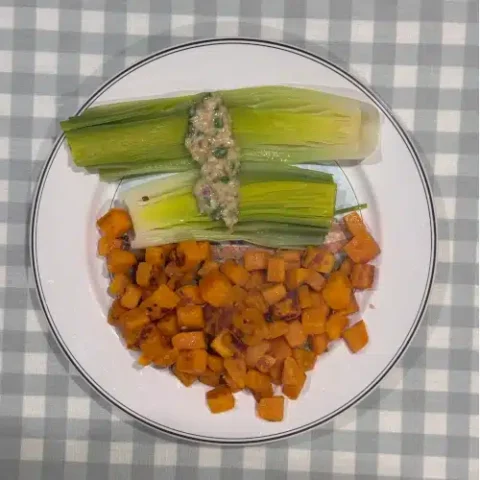
Leeks with Mustard Sauce: A Classic Vegan Irish Recipe
Discover this delicious vegan leeks with mustard sauce recipe from Ireland. Learn about leek nutrition, fascinating history, and why this humble vegetable deserves a place in your kitchen.
Ingredients
For the Vinaigrette
- 1 tablespoon olive oil
- 3 tablespoons red wine vinegar
- 2 tablespoons walnut oil
- 2 finely chopped shallots
For the Leeks
- Salt
- 2 tablespoons chopped flat-leaf parsley, for garnish
- 3 tablespoons crushed roasted walnuts, for garnish
- Black pepper from the mill
- Boiled or steamed potatoes, to accompany
Instructions
- To prepare the vinaigrette, combine the olive oil, vinegar, mustard, and chopped shallot in a bowl and whisk together.
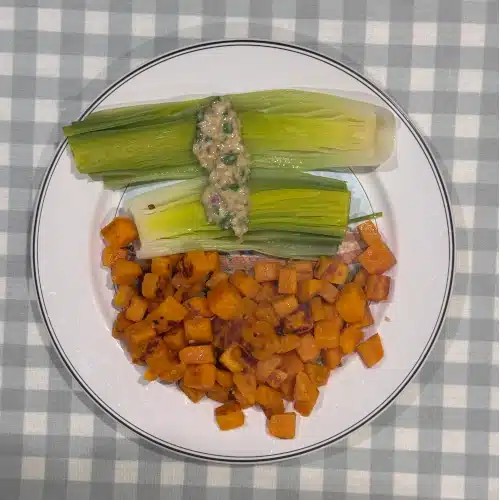
- To prepare the leeks, bring a large pan of salted water to the boil. Gently immerse the leeks and simmer for about 15 minutes, until the tip of a knife easily pierces them. Drain the leeks and pat dry with kitchen paper. Cut them in half lengthways.
- Arrange on a plate and drizzle with the vinaigrette. Season with salt and pepper. Serve with boiled or steamed potatoes, either hot or at room temperature.
Notes
You can serve them with sweet potatoes too.
Nutrition Information:
Yield: 4 Serving Size: 1Amount Per Serving:Calories: 185Total Fat: 18gSaturated Fat: 2gUnsaturated Fat: 16gSodium: 7mgCarbohydrates: 6gFiber: 2gSugar: 2gProtein: 2g
The Remarkable Story of Leeks: From Ancient Symbol to Modern Superfood
Leeks with mustard sauce are among the most elegant yet simple dishes in traditional Irish cuisine. This classic combination showcases how a humble vegetable can be transformed into something truly special with just a few carefully chosen ingredients. Leeks have graced dinner tables for thousands of years…
A Vegetable Steeped in History
The leek’s story begins in ancient Mesopotamia and Egypt, where it was cultivated as early as 4,000 years ago. According to the Ancient History Encyclopedia, leeks were a dietary staple for the workers who built the pyramids, providing essential nutrients and energy for these monumental tasks. The Roman emperor Nero allegedly consumed leeks daily, believing they improved his singing voice, earning him the nickname “Porophagus” or “leek-eater.”
Wales adopted the leek as its national emblem, and legend attributes this to Saint David, the patron saint of Wales. During a battle against the Saxons in the seventh century, Saint David supposedly instructed Welsh soldiers to wear leeks in their caps to distinguish friend from foe. To this day, Welsh people celebrate Saint David’s Day on 1st March by wearing leeks or the alternative symbol, daffodils.
The simplicity of leeks with mustard sauce demonstrates how traditional Irish cooking celebrates quality ingredients. This dish requires minimal preparation yet delivers maximum flavour, making it perfect for both weeknight dinners and special occasions
Nutritional Powerhouse in Disguise
Whilst leeks may appear unassuming, they pack an impressive nutritional punch. According to the NHS, leeks are an excellent source of vitamin K, which plays a crucial role in blood clotting and bone health. A single 100-gram serving provides approximately 47 micrograms of vitamin K, nearly half the recommended daily intake.
These cylindrical vegetables are also rich in flavonoids, particularly kaempferol, which research published in the Journal of Nutrition suggests may help reduce chronic inflammation and protect against certain cancers. The prebiotic fibres in leeks, called fructans, feed beneficial gut bacteria, supporting digestive health and potentially boosting immunity.
Leeks contain folate, essential for cell division and DNA synthesis, making them particularly valuable for pregnant women. They’re also a good source of manganese, which aids bone formation and helps regulate blood sugar levels. At just 61 calories per 100 grams, leeks offer substantial nutrition without expanding your waistline.
When you prepare leeks with mustard sauce, you’re creating a low-calorie, nutrient-dense dish that satisfies without compromising your health goals.
From Garden to Table: Growing and Selecting Leeks
The Royal Horticultural Society notes that leeks are remarkably hardy vegetables, withstanding frost and even improving in flavour after exposure to cold temperatures. They require a long growing season, typically 120 to 150 days, which explains why they’re traditionally associated with autumn and winter cuisine.
When selecting leeks at the market, look for specimens with bright green leaves and white, firm shanks. Smaller leeks tend to be more tender and sweet, whilst larger ones may have a stronger, more robust flavour. The dark green tops, often discarded, are perfectly edible and excellent for making vegetable stock, reducing food waste in your kitchen.
Culinary Versatility Beyond Compare
Leeks’ mild, sweet flavour makes them extraordinarily versatile in vegan cooking. Unlike onions, which can overpower dishes, leeks provide a gentle, sophisticated backdrop that enhances other ingredients. They’re magnificent in soups, the most famous being vichyssoise, a French creation that’s equally delicious served hot or chilled.
The classic Welsh dish cawl showcases leeks alongside root vegetables in a warming stew, whilst the Scottish cock-a-leekie soup (easily veganised) demonstrates the vegetable’s affinity for herbs and barley. Leeks caramelise beautifully when roasted, developing a complex sweetness that pairs wonderfully with mustard. This is why leeks with mustard sauce has remained a beloved dish across Ireland and beyond for generations.
Fascinating Leek Facts
The world’s heaviest leek weighed an astonishing 10.7 kilograms, according to Guinness World Records, grown by Paul Rochester in the United Kingdom in 2018. Competitive leek growing is a serious pursuit in Northeast England, where gardeners guard their growing secrets as closely as crown jewels.
In medieval times, leeks symbolised victory and resilience. Their ability to thrive in poor soil and harsh conditions made them a reliable food source during difficult periods. This reliability explains why leeks feature so prominently in peasant cuisines across Europe, from Irish colcannon to French pot-au-feu. Discover more hearty dishes in my recipe collection.
Interestingly, whilst we primarily consume the white and light green portions, the dark green leaves contain even higher concentrations of vitamins and antioxidants. Progressive chefs and home cooks are increasingly incorporating these nutrient-dense leaves into pestos, stir-fries, and broths.
A Sustainable Choice for Modern Kitchens
In an era of environmental consciousness, leeks represent a sustainable food choice. They grow well in temperate climates without requiring extensive irrigation or chemical inputs. Their long harvest window, from late summer through winter, means you can enjoy locally grown leeks for many months, reducing food miles and supporting local farmers.
This elegant vegetable truly deserves a starring role in your vegan repertoire. Whether you’re preparing traditional leeks with mustard sauce as shown in our recipe, folding them into a creamy risotto, or simply grilling them with herbs, leeks bring sophistication and nutrition to plant-based cuisine. Their rich history, impressive health benefits, and culinary flexibility make them an invaluable addition to any kitchen garden or shopping basket.