

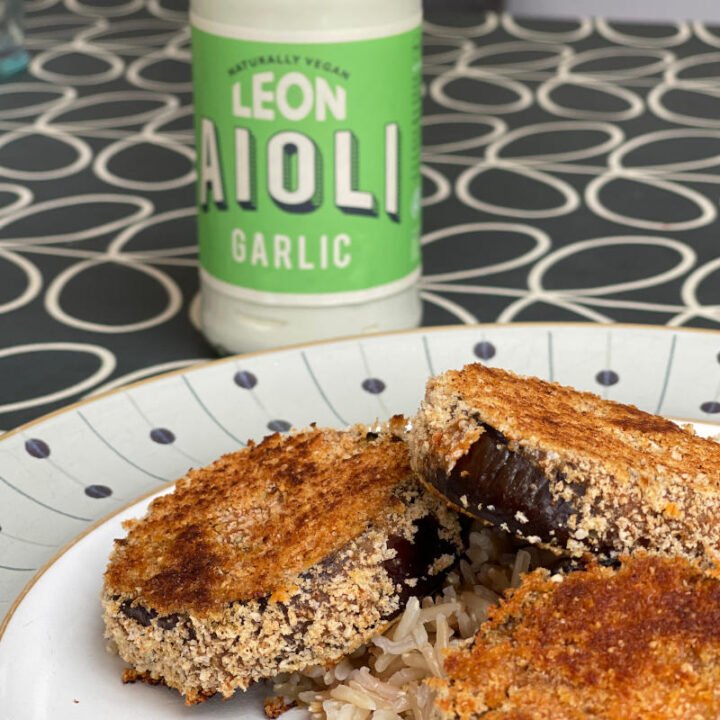
The Ultimate Plant-Based Aubergine Schnitzel
Discover the ultimate plant-based aubergine schnitzel—thin slices of aubergine, crisply crumbed and pan-goldened, with a tender centre and a bright squeeze of lemon. Comfort food made lighter, quicker, and wonderfully meat-free.
Ingredients
- 1 large aubergine
- frying oil
Egg replacement
- 1/4 cup all-purpose flour
- 1/2 cup water
- 1/2 tsp paprika powder
- 1/2 tsp Himalayan salt
Breading
- 1/3 cup breadcrumbs
- 1/2 tsp Himalayan salt
- 1/2 tsp paprika powder
- 1 tsp crushed pumpkin seeds
- 1 tsp sesame seeds
Instructions
- Wash the aubergine. And cut it in 7/8 slices (about 1/3 inch).
- In a large pan, heat some oil and add the aubergine slices. Let them cook for about 10 minutes, turning them halfway. Then drain, place them on kitchen towels to remove excess oil, and set aside to cool off.
- In a bowl, mix the ingredients for the egg replacement. It should have an egg-like consistency, you might have to add more water or flour to achieve that.
- In another bowl, combine the ingredients for the breading.
- When the aubergine slices are cold enough to handle, dip them first in the egg replacement, then coat them in the breading.
- In a large pan, heat the frying oil (the bottom should be covered with oil) and add in the breaded Aubergine Schnitzel. Fry them on medium-high heat for about 5 minutes per side. They should be golden and crispy on both sides.
- After frying, put them on a kitchen towel to remove excess oil and enjoy!
Nutrition Information:
Yield: 2 Serving Size: 1Amount Per Serving:Calories: 322Total Fat: 10gSaturated Fat: 1gTrans Fat: 0gUnsaturated Fat: 8gCholesterol: 0mgSodium: 913mgCarbohydrates: 56gFiber: 10gSugar: 12gProtein: 7g
Aubergine Schnitzel: A Crispy Plant-Based Take on a European Classic
Few dishes are as universally comforting as a well-made aubergine schnitzel. With its golden, crunchy coating and soft, flavour-absorbing centre, this plant-based version delivers everything we love about traditional schnitzel—without the meat. It’s proof that vegetables, when treated with care, can rival even the most iconic comfort foods.
A Brief History of Schnitzel
Schnitzel is less a single recipe and more a technique. Thin slices are coated—traditionally in flour, egg, and breadcrumbs—then fried until crisp. The most famous version, Wiener Schnitzel, originates from Vienna and is classically made with veal. Across Europe, variations abound: Italy’s cotoletta alla Milanese, German schnitzel, and countless regional cousins.
What unites them all is contrast: a crackling crust that gives way to a tender interior. A plant-based aubergine schnitzel honours that tradition, swapping meat for vegetables that can withstand heat while delivering depth and texture.
Why Aubergine Works So Well for Schnitzel
Aubergine is the unsung hero of meat-free cooking. Its sponge-like flesh absorbs seasoning beautifully, while its structure softens without collapsing. When sliced lengthways, aubergine creates generous cutlets that closely mimic traditional schnitzel.
Salting the slices briefly draws out excess moisture, improving browning and helping the crumb adhere. Once cooked, aubergine becomes silky and rich—almost steak-like—making it ideal for a crispy schnitzel coating.
The Flavour Equation Behind a Great Aubergine Schnitzel
The appeal of a great aubergine schnitzel lies in simple food science. As the breadcrumbs fry, starches brown through the Maillard reaction, creating nutty, toasted flavours.
In a plant-based version, eggs are easily replaced with a chickpea flour batter or other egg alternatives. Using panko breadcrumbs adds lift and crunch, while finer homemade crumbs give deeper flavour. Season every layer lightly, and consider adding garlic powder, smoked paprika, lemon zest, or chopped parsley to the crumb for extra character.
Breadcrumb choice plays a major role in the final texture: lighter, flakier crumbs create an airy crunch, while finer crumbs deliver a more compact, traditional crust. Learning how coatings behave under heat is a useful foundation for mastering any schnitzel-style dish.
Nutrition at a Glance
Aubergine is naturally low in kilocalories and high in fibre, supporting digestion and satiety. Its deep purple skin contains nasunin, an anthocyanin antioxidant, while the flesh provides chlorogenic acid, which has been studied for its antioxidant properties.
Shallow-frying does increase energy density, but you can keep things balanced by using the correct oil temperature or choosing oven-baking or air-frying. According to British Nutrition Foundation, pairing fried foods with vegetables and whole foods helps maintain a balanced meal.
Serve your aubergine schnitzel with a crisp salad or warm potatoes for a satisfying, nutrient-aware plate.
Technique Tips for a Truly Crisp Result
- Slice & salt: Aim for 1–1.5 cm thickness. Salt for 15–20 minutes, then blot dry.
- Three-bowl method: Seasoned flour → egg replacement → breadcrumbs. Press crumbs firmly.
- Hot pan, modest oil: Use rapeseed or sunflower oil; the oil should shimmer, not smoke.
- Minimal flipping: Let each side brown fully before turning.
- Rest properly: Drain on a wire rack to keep the crust crisp.
Serving Ideas for Aubergine Schnitzel
Keep it classic with lemon wedges and potato salad dressed with dill and mustard. For something lighter, try a herby slaw with a quick plant-based caper mayo. Leftovers make an excellent schnitzel sandwich—layered into crusty bread with lettuce, pickles, and mustard.
You might also enjoy pairing this with other mains from my plant-based mains recipes or serving it alongside a vegan potato salad for a traditional touch.
Fun Facts
- In Austria, “Wiener Schnitzel” is legally protected when made with veal; plant-based versions are often called Gemüse-Schnitzel.
- The word schnitzel comes from Schnitz, meaning “slice”—perfect for aubergine cutlets.
- Breadcrumb choice matters: panko creates airy shards, while semolina crumbs give a sturdier crunch.
Make-Ahead & Storage
You can crumb aubergine schnitzel slices up to a day ahead and chill them on a tray. They also freeze well—cook straight from frozen, adding a minute or two per side. Once cooked, keep warm on a rack in a low oven and avoid stacking to preserve crispness.



[…] you enjoy vegetables as mains, you might also like my plant-based aubergine schnitzel, which uses a similar “meaty” technique […]