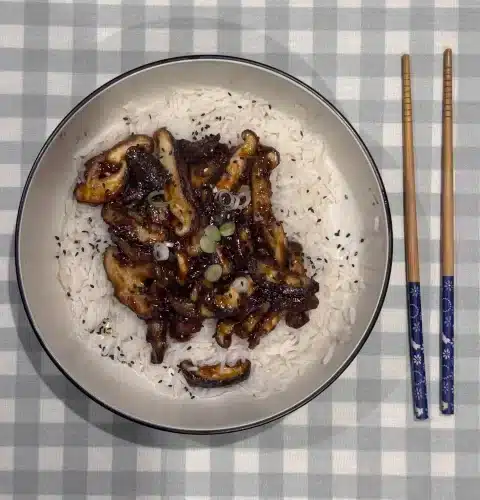
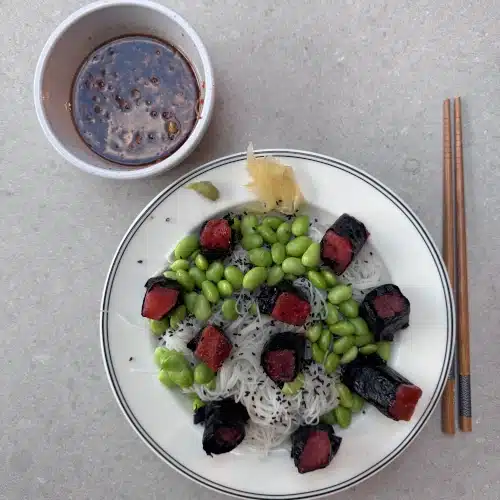
Roasted sushi style watermelon transforms fresh watermelon into savoury, tuna-like bites. Marinated and roasted until tender, then served over rice noodles with a sriracha dressing. An elegant, all-vegan take on watermelon sushi.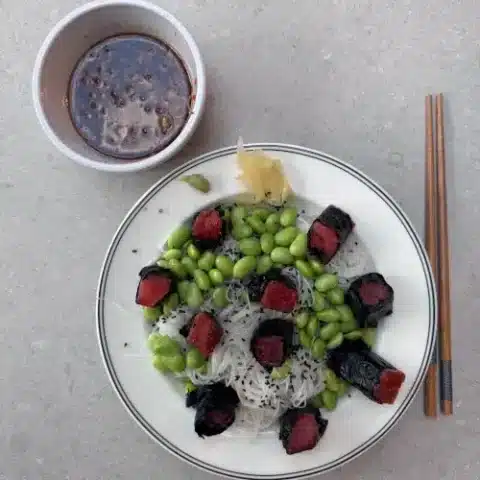
Watermelon Sushi: Irresistible Vegan Recipe
Ingredients
Instructions
Nutrition Information:
Yield: 4
Serving Size: 1
Amount Per Serving:Calories: 23519Total Fat: 784gSaturated Fat: 106gUnsaturated Fat: 679gCholesterol: 104mgSodium: 24943mgCarbohydrates: 3477gFiber: 356gSugar: 482gProtein: 616g
Where Sushi Really Comes From
Sushi is far older than most people imagine, and it didn’t begin with raw fish at all. Its earliest ancestor was narezushi, a way of preserving fish by fermenting it in salted rice — a technique that spread from the rivers of Southeast Asia to Japan many centuries ago. The word “sushi” actually refers to that sour, vinegared rice rather than the topping, which is why sushi has never truly meant “raw fish”. The neat, bite-sized nigiri we recognise today only appeared in the 1820s in Edo, now Tokyo, where a chef named Hanaya Yohei sold it as fast food for busy city workers. You can dig into the full timeline on Wikipedia’s sushi page. Seen in that light, watermelon sushi is simply the newest chapter in a long, ever-evolving story — a modern, meat-free take that swaps the fish for fruit while keeping the classic shape.
Is Watermelon Sushi Healthy?
One of the joys of watermelon sushi is that it’s as nourishing as it is striking. Watermelon is roughly 92% water, which makes it beautifully hydrating, and it’s low in calories while still offering vitamin C, vitamin A and potassium. It’s also one of the richest fruit sources of lycopene, the antioxidant that gives the flesh its vivid red colour; you can read the full rundown of watermelon’s health benefits over at Healthline. The rest of the plate earns its place too: nori seaweed contributes minerals and iodine, while sushi rice provides gentle, satisfying carbohydrates. Because there’s no raw fish involved, watermelon sushi also sidesteps the mercury and parasite worries that can come with traditional sushi, making it a relaxed, worry-free choice for a summer buffet or a make-ahead lunch.
Fun Facts to Share at the Table
Sushi is full of delightful surprises. Conveyor-belt sushi, known as kaiten-zushi, was dreamt up in 1958 by a restaurateur who took his inspiration from a brewery’s bottling line. The humble cucumber roll, or kappamaki, is named after the kappa — a mischievous water sprite from Japanese folklore said to adore cucumbers. And the now-global California roll was actually invented in North America to win over diners who felt uneasy about seaweed and raw fish. Traditionally, nigiri is even eaten with the fingers rather than chopsticks, a nod to its street-food roots. Watermelon sushi carries that very same spirit of playful reinvention, taking a much-loved format and giving it a fresh, unexpected twist that curious eaters and committed vegans can enjoy side by side.
How to Serve Watermelon Sushi
Watermelon sushi is at its best served lightly chilled, sliced into tidy pieces over well-seasoned rice and finished with a brush of soy sauce, a little wasabi and some pickled ginger. For a generous spread, pair it with edamame, miso soup or a crunchy cucumber salad. If you fancy building a whole plant-based Japanese feast around it, these vegan rice recipes offer plenty of ideas for the base, while this collection of Asian-inspired vegan noodle and rice dishes helps round out the table. You’ll find even more Asian inspiration among my vegan sides, mains and salads. Any leftover roasted watermelon keeps in an airtight container in the fridge for up to three days, though it’s so moreish it rarely lasts that long. Assemble each piece fresh, just before serving, so the nori stays crisp and the rice stays soft.
However you plate it up, watermelon sushi is proof that plant-based food can be every bit as elegant, surprising and delicious as the classic that inspired it.