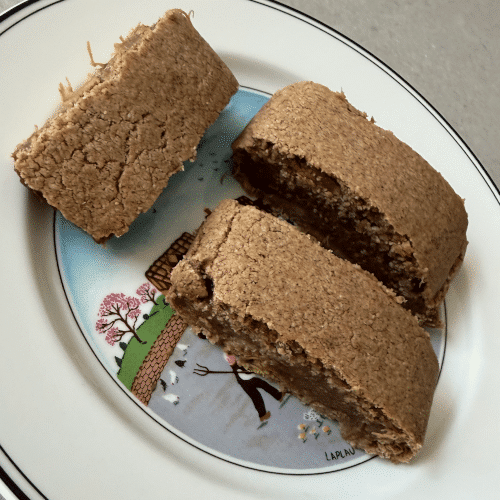
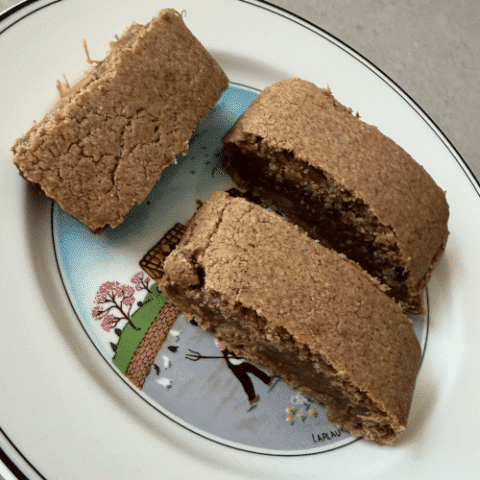
Fig Bars (Figolu-Style) - Vegan & Gluten-Free
Soft, jammy homemade fig bars inspired by the French Figolu biscuit. Made with a tender oat-flour dough and a thick fig filling. Vegan, gluten-free and refined-sugar-free, they're perfect for a wholesome snack or lunchbox treat.
Ingredients
- 150 g large dried figs , or fresh figs (see notes)
- 25 ml maple syrup
- 150 g rolled oats
- 2 tsp baking powder
- ¼ tsp nutmeg
- 1 tsp cinnamon
- 50 g cashew butter
- 50 ml almond milk
Instructions
- Pour boiling water over the dried figs, cover, and leave to soak for 2 hours.
- Blend the rolled oats into a flour in a blender. Mix the flour, baking powder and spices together, then add the almond milk and cashew butter and bring it together into a dough.
- Drain the figs and blend them with the maple syrup in a blender or food processor until you have a thick paste.
- Preheat the oven to 175°C (350°F). Roll the dough out thinly, spoon the fig paste down the middle, then fold both sides of the dough over to form a log. Cut into 10–12 rectangles.
- Bake for 10–15 minutes on parchment paper.
- Remove and let cool completely before serving. They firm up as they cool. (10 min for chewy bars, 15+ minutes for a crisp, Figolu-style snap.)
Notes
Skip the soak in step 1; fresh figs are already soft. Use about 300 g fresh figs (stems removed, roughly chopped) in place of the 150 g dried figs. Because fresh figs are mostly water, cook them down first: simmer in a dry saucepan over medium heat for 15–20 minutes, stirring, until they collapse into a thick, jammy paste, then blend with the maple syrup. Fresh figs are milder and less sweet, so taste and add a little extra maple syrup, plus a squeeze of lemon or a pinch more cinnamon for depth. Bars made this way stay softer, so eat them within a day or two.
Nutrition Information:
Yield: 10 Serving Size: 1Amount Per Serving:Calories: 3484Total Fat: 96gSaturated Fat: 16gUnsaturated Fat: 80gSodium: 437mgCarbohydrates: 596gFiber: 79gSugar: 140gProtein: 99g
From a Southern French Garden to a UK Harvest: My Love Affair with Figs
Some fruits win you over the moment you taste them. Figs, for me, took a rather different route.
I spent years living in the south of France, where fig trees seem to grow on every corner, spilling over garden walls, shading village squares, their broad leaves turning the light green and gold. And here’s my confession: I was never truly a fan of the fruit itself. The soft, jammy flesh and the crunch of all those tiny seeds just never quite called to me. But the trees? The trees I adored. There’s nothing like the smell of a fig tree warmed by the Mediterranean sun, that heady, green, almost coconut-sweet scent that hangs in the air on a hot afternoon. To me it’s the smell of summer itself: slow lunches, cicadas, and dappled shade.
So imagine my surprise when, after moving to the UK, I found a fig tree quietly growing in our own garden. I honestly didn’t expect figs to thrive here; they feel so tied to hot, dry climates. But the British climate is kinder to them than you’d think. As the Royal Horticultural Society explains, figs crop well in the UK when planted in a warm, sheltered spot, and hardy varieties like ‘Brown Turkey’ shrug off our winters without complaint. Ours has done far more than survive year after year; it hands us an absolute abundance of fruit, far more than two people could ever eat fresh.
Which leaves me with a very happy problem: what on earth to do with all these figs?
A fruit worth celebrating
Even for someone who doesn’t love eating them raw, figs are hard not to respect. They’re naturally sweet, high in fibre, and rich in minerals such as potassium, calcium, and magnesium. According to Cleveland Clinic, they can support heart health, ease digestion and help balance blood sugar, not bad for something that tastes like a treat. Dried figs are more concentrated in sugar and flavour, while fresh ones are lighter and more delicate, which matters a great deal once you start cooking with them.
If you fancy growing your own, BBC Gardeners’ World has a lovely beginner’s guide. A tree kept in a pot has its roots restricted, which, counterintuitively, encourages better fruiting, making it ideal for a patio or a small garden.
Chasing the Figolu
Here’s the other half of the story. Living in France, I came to love Figolu: those iconic little biscuits with soft fig paste tucked inside a lightly sablé shell. They’re the kind of snack that tastes like childhood, even if, like me, you only came to them as an adult. Over the years I’ve been quietly obsessed with recreating them at home, minus the palm oil and refined sugar.
This recipe is the closest I’ve come. The oat-flour dough bakes up tender, the fig filling is thick and jammy, and that nostalgic flavour is unmistakably there. I won’t pretend it’s perfect. I’m still refining the ratio of dough to filling and chasing that signature Figolu snap, but as a wholesome plant-based snacks, it more than earns its place in the biscuit tin. The homemade cashew butter is what gives the dough its richness, so it’s worth having a jar on hand.
The recipe calls for dried figs, because they deliver the most concentrated, authentic flavour. But if you’re lucky enough to have a tree groaning with fresh figs like ours, you can absolutely use those instead. Just check the note beneath the recipe for how to adapt it.
If you bake a batch, I’d love to see them. And if your own fig tree is feeling generous this year, do tell me how you use the glut, I’m always after new ideas beyond my other fig recipes. They’re wonderful, by the way, with a cup of homemade chai latte on a grey afternoon.