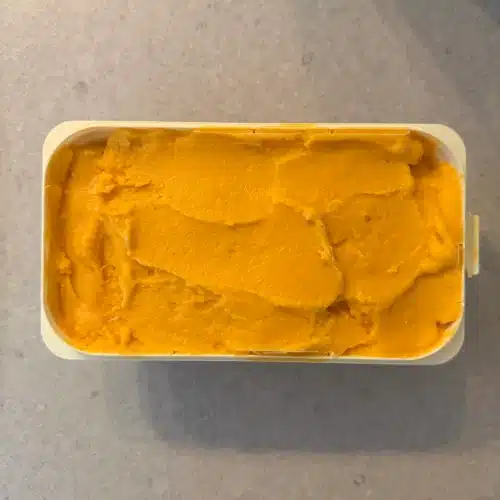
A wonderfully creamy, dairy-free apricot ice cream made with ripe summer apricots and coconut milk. Naturally fruity and subtly tangy, it works with an ice cream maker or the no-churn method. Use ripe, fragrant apricots for the best flavour. If yours are a little underripe, add a tablespoon of maple syrup. The oil and cornflour are optional, but they help create a smoother, less icy texture - especially handy if you don't have an ice cream maker.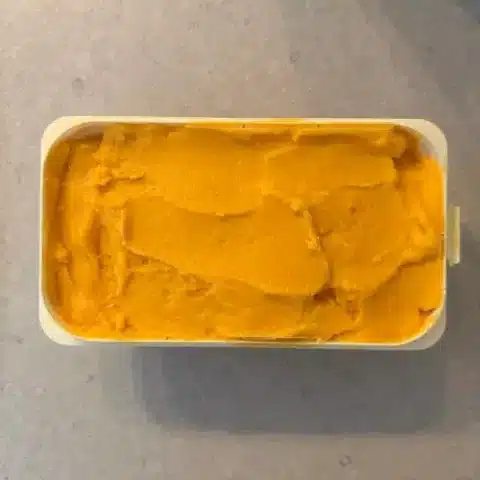
Vegan Apricot Ice Cream: Easy & Creamy Recipe
Ingredients
Instructions
Notes
Nutrition Information:
Yield: 6
Serving Size: 1
Amount Per Serving:Calories: 243Total Fat: 10gSaturated Fat: 8gUnsaturated Fat: 2gCholesterol: 3mgSodium: 8mgCarbohydrates: 39gFiber: 2gSugar: 36gProtein: 3g
The full recipe is in the card above. Below is a little more about the golden fruit behind this apricot ice cream — where it comes from, why it’s good for you and a few facts to share while the base churns.
Why you’ll love this apricot ice cream
This is a fuss-free recipe built around real fruit rather than a long list of additives. A gentle apricot compote gives it a deep, jammy flavour, while full-fat coconut milk lends the richness you’d normally get from dairy cream. Best of all, you don’t need any special kit — an ice cream maker gives the smoothest result, but the no-churn method works beautifully too. If you enjoy fruit-forward frozen puddings, this one sits somewhere between a rich banana-and-passion-fruit ice cream and a lighter sorbet.
Where do apricots come from?
Despite the botanical name Prunus armeniaca — the “Armenian plum” — apricots aren’t originally from Armenia at all. Modern genetic studies place their origins in Central Asia and China, where they were cultivated thousands of years ago before travelling west along the Silk Road. According to Wikipedia, the Romans knew the fruit by the first century AD, and our English word “apricot” traces back through Arabic and Latin to a term meaning “early-ripening” — a nod to how early in the season these trees fruit.
Are apricots good for you?
Turning fruit into a frozen pudding is always going to be a treat rather than a health food, but apricots do bring something to the bowl. They’re naturally low in calories and a good source of fibre, potassium and vitamin C. Their vivid orange colour comes from beta-carotene, which the body converts into vitamin A. As Healthline explains, apricots are also rich in antioxidants that help protect your cells, and their carotenoids are especially good for eye health. Using ripe, naturally sweet fruit means you can keep the added sugar sensible while still getting plenty of flavour.
Fun facts about apricots
A few things that surprised me while making this apricot ice cream:
- Turkey grows most of the world’s apricots, with the Malatya region alone producing a huge share of the global crop.
- Amaretti biscuits and amaretto liqueur are traditionally flavoured with apricot kernels rather than almonds — the stones hide a secret.
- You can grow them in Britain. They’re hardier than they look; the Royal Horticultural Society recommends training a tree against a warm, sunny wall for the best crop.
- Arab poets once nicknamed the fruit the “moon of the faith” — a lovely image for something so golden.
Tips for the creamiest dairy-free apricot ice cream
Start with ripe, fragrant apricots — underripe fruit tastes flat, so add a spoonful of maple syrup if yours need a lift. Full-fat coconut milk is my go-to for body, though oat cream makes a lovely, more neutral swap if you’d rather the apricot flavour take centre stage. A pinch of salt and a squeeze of lemon keep everything bright.
No ice cream maker? Freeze the base in a shallow tin and beat it well every 30–45 minutes to break up the ice crystals before your apricot ice cream firms up. It’s the same trick I use for my dark chocolate sorbet and my vibrant beetroot ice cream, and it delivers a genuinely creamy result with nothing more than a fork and a little patience.
Serving and storing your apricot ice cream
Homemade apricot ice cream sets firmer than shop-bought, so let it sit at room temperature for 8–10 minutes before scooping. It’s gorgeous on its own, but also wonderful with fresh berries or alongside a fruity blackberry sorbet for a two-scoop pudding. Store it in a lidded container with a piece of baking parchment pressed onto the surface to keep ice crystals at bay, and enjoy within about two weeks.
If you give this apricot ice cream a go, I’d love to hear how it turns out — and whether you tried the oat cream version. Leave a comment below and let me know.